Kempten, Germany: Self-Guided Walking Tour
Things to Do in Kempten: Roman Ruins, Abbey Heritage and Historic Squares
The best things to do in Kempten combine Roman archaeology, princely abbey buildings, historic churches and quiet traces of medieval fortifications. As one of the oldest cities in Germany, Kempten offers plenty to explore on foot, from the former Princely Abbey to the remains of Cambodunum. Neywo’s free audio guide for Kempten includes 44 narrated places, helping you discover the city as you walk.
Kempten lies in Bavaria, in the Allgäu region of southern Germany. Its history is especially visible in the contrast between the former ecclesiastical town, the Protestant old town and the Roman settlement that once stood at Cambodunum.
What to See in Kempten
Kempten Abbey and the former Prince-Abbots’ residence
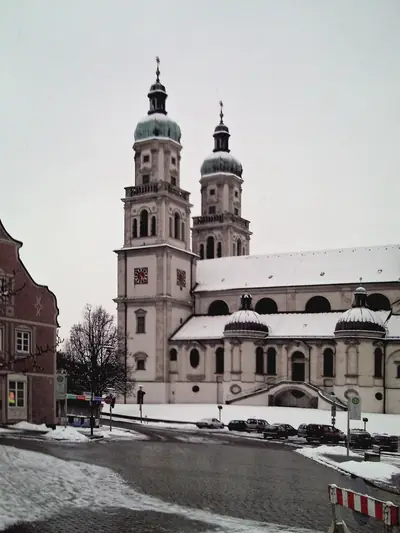
Kempten Abbey was once the political and spiritual centre of a small sovereign ecclesiastical state within the Holy Roman Empire. The complex included the Residenz and the collegiate church of St. Lorenz, where the Prince-Abbot ruled his territory as both a cleric and a temporal lord.
The abbey’s power ended when Bavarian troops occupied the territory in 1802. The abbey was dissolved a year later during the secularization that reshaped the political map of Germany. The surviving buildings make this period of Kempten’s history one of the city’s most important stories.
St. Lorenz Basilica
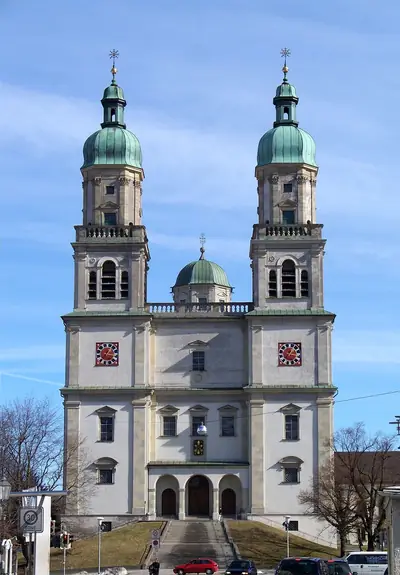
St. Lorenz Basilica stands on a natural rise above the left terrace of the Iller and remains one of Kempten’s principal landmarks. It was the abbey church of Benedictine Kempten Abbey and is dedicated to Lawrence of Rome. The church also has patronages connected with the Assumption of Mary and the city’s saints, Gordianus and Epimachus.
Its interior reflects its unusual role as both collegiate and parish church. The choir beneath the dome was reserved for the monastic community, while the nave served the parish congregation; a choir screen separated the two areas. Construction began during the Thirty Years’ War, making St. Lorenz one of the first major churches built in Germany after the conflict.
St. Mang and St.-Mang-Platz
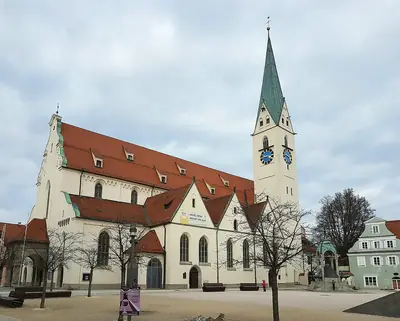
St. Mang is an Evangelical Lutheran parish church that has stood at the centre of Kempten for centuries. Much of the present building dates from the 15th century, although it has been altered repeatedly. The church became the centre of the Reformation in the Kempten region in 1527.
The building’s appearance records several changes in taste. It was rebuilt in the Rococo style in 1767, transformed with Neo-Gothic additions in the 19th century and restored between 1911 and 1913, when many of those later additions were removed. The church gives its name to St.-Mang-Platz, one of the most atmospheric historic squares in the city.
Erasmus Chapel
The Erasmus Chapel is not a conventional church today but an archaeological showroom built over the preserved foundations of a medieval cemetery chapel. The original building was a 13th-century Catholic burial chapel with two levels: the upper floor was dedicated to the Archangel Michael, while the lower level was a charnel house dedicated to Saint Erasmus of Antioch.
The chapel stood beside St. Mang, which had become Protestant in the 16th century, until it was demolished in 1857. Excavations in 2003 and between 2008 and 2010 uncovered around 500 graves from the former cemetery. Since 2010, the foundations have been protected and presented in a multimedia display.
Rotes Haus
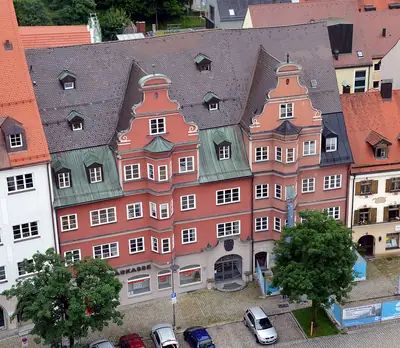
On St.-Mang-Platz, the Rotes Haus—or Red House—stands opposite St. Mang. Despite its unified appearance, it is actually made up of two late-medieval houses. They were given a single Baroque facade around 1720 to 1730, with two dormers and two bay windows facing the square.
The building is a reminder of how Kempten’s older houses were adapted to later architectural styles. Its 18th-century facade presents a coherent civic statement while preserving the medieval origins of the two buildings behind it.
Jenisch-Haus
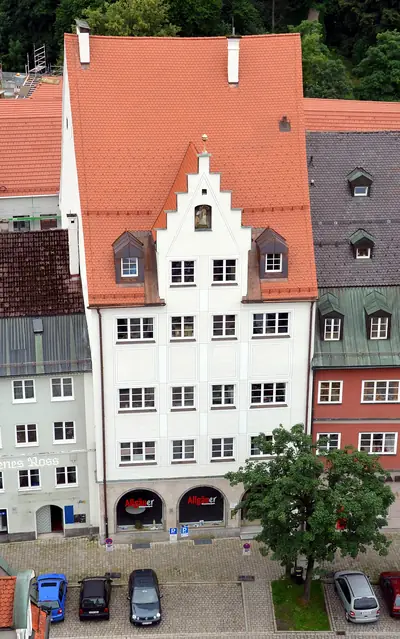
The Jenisch-Haus is a well-preserved patrician mansion at St.-Mang-Platz 1, directly beside the Rotes Haus. Its steep gabled roof and position on the square make it easy to recognise. The building was also owned by the Jenisch family, linking the two neighbouring houses to one of Kempten’s prominent historic families.
Kempten Museum in the Zumsteinhaus
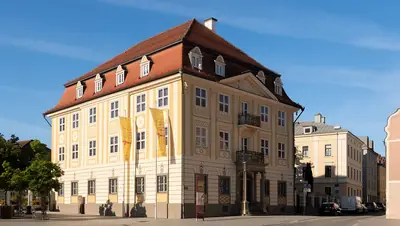
The Kempten Museum occupies the Zumsteinhaus on Residenzplatz. The historic building was constructed in 1802 for the Zumstein de la Pierre family, merchants originally from Savoy, and later became city property.
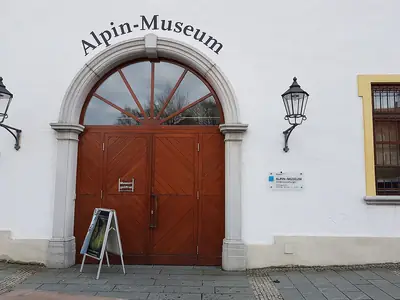
Since reopening here in 2019, the museum has presented more than two thousand years of local history, from Roman times to the present. Its participatory approach involves the community as well as displaying historical objects. The museum was named Germany’s best local museum in 2021.
Archaeological Park Cambodunum
For Roman history, the Archaeological Park Cambodunum is one of the most important things to see in Kempten. Excavations and reconstructions bring the Roman settlement of Cambodunum, dating from the time of Emperor Augustus, to life.
The park is arranged in three main areas. The Gallo-Roman temple district contains five reconstructed buildings and a double hall surrounding the temple area. The small baths are protected inside a building that also contains a museum display. In the forum area, reconstructions and remains represent the basilica, praetorium, soldiers’ accommodation and economic buildings.
The excavations began in 1885, and more than 40 further excavations have taken place since then. The site helps explain Kempten’s Roman origins through both archaeological remains and reconstructed buildings.
The Temple of Hercules
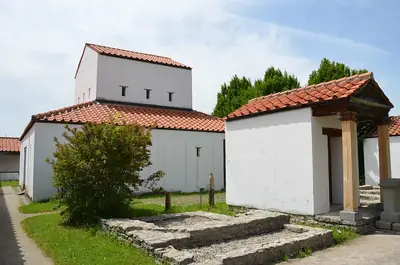
Within the Roman archaeological area, the reconstructed Temple of Hercules offers a vivid impression of Cambodunum’s religious life. The sanctuary was dedicated to Hercules, the hero-god associated with strength and protection.
The reconstruction stands in the centre of the Gallo-Roman temple district, giving visitors a more tangible sense of how a Roman provincial sanctuary could have appeared.
Burghalde
Burghalde is a gentle hill in the heart of Kempten’s old town, crowned by the ruins of an ancient fortress. People had lived on the trapezoidal hill since Late Antiquity. During the Middle Ages, it became the seat of the Prince-Abbot’s vogt, the local lord who ruled the city from the hill.
Kempten’s Imperial City acquired Burghalde in 1379 and later incorporated it into the city’s defensive walls. The early modern fortifications were demolished in 1705. In the mid-19th century, a local association turned the hill into Kempten’s first public park and built an open-air stage, which still hosts performances. The caretaker’s house near the stage combines a stone ground floor from 1870 with a Neo-Gothic wooden upper storey added in 1889.
Stiftsmälzerei and the Marstall
The Stiftsmälzerei is a former malt house completed in 1788 under Prince-Abbot Rupert von Neuenstein after a fire destroyed the earlier brewery. It belonged to the Prince-Abbey’s economic complex, alongside the Marstall stables and the Kornhaus granary.
Nearby, the Marstall was built around 1730 under Prince-Abbot Anselm von Reichlin-Meldegg. It was intended to form part of a larger three-courtyard complex connected with the collegiate brewery, although the complete plan was never realised. The building’s present appearance also reflects demolitions and rebuilding in the 19th century and in 1968.
Other historic sites
The Allgäuer Burgenmuseum offers a place to explore the region’s castle history. The Rotschlössle, in Kempten’s Sankt Mang district, is a protected patrician country estate also known as Oberwies, Schloss Rotschelldorf and Neubronnerschlössle. Its current name refers to the reddish colour once used on its facade.
The site of Burg Kalbsangst preserves the traces of a medieval castle above the Kalbsangsttobel ravine. The castle has disappeared, but a ring ditch and a memorial stone remain as reminders of the former fortification and noble residence.
Explore Kempten with a self-guided audio tour
A Kempten self-guided walking tour lets you discover the city without joining a group or following a fixed schedule. Neywo’s free audio guide tells the story of each place as you reach it, at your own pace, with narration available in 11 languages.
The app includes:
- Two walking tours
- Where the Prince-Abbots Ruled: 1.21 km, 66 minutes and 8 narrated stops
- From Roman Cambodunum to the Free Imperial City: 1.97 km, 92 minutes and 11 narrated stops
- One bike route
- Iller Cycle Path: Hirschdorf Chapel to the Roman Temple: 5.6 km, 28 minutes and 2 narrated stops
Download Neywo to explore Kempten with its free audio guide. As you move through the city, the app plays each story when you reach the relevant place—at your own pace, with no group and no schedule.
Places with an audio guide in Kempten
8 places in Kempten with a Neywo audio guide. Each one starts telling its story as you reach it.
Self-guided tours in Kempten
3 tours in Kempten, free in the Neywo app. Each stop tells its story as you reach it.
- Bike ride
Iller Cycle Path: Hirschdorf Chapel to the Roman Temple
Ride south along the Iller from the little Baroque chapel of St. Magdalena in Hirschdorf, through Kempten, to the reconstructed Gallo-Roman temple of Hercules in the Cambodunum archaeological park. About 5.6 km of mostly traffic-free cycle path, easy for any rider.
St. Magdalena (Kempten) · Temple of Hercules
Open this tour: Iller Cycle Path: Hirschdorf Chapel to the Roman Temple - Walk
Where the Prince-Abbots Ruled
For centuries Kempten was two rival cities with one name, and this walk covers the Catholic one. You pass the baroque church and Residenz of the Prince-Abbots, their malt house and stables, and two quiet chapels. It ends at the museum that holds 2,000 years of local history.
Marienkapelle · Seelenkapelle · Stiftsmälzerei · Marstall (Kempten) · Hildegardplatz · St. Lorenz Basilica …
Open this tour: Where the Prince-Abbots Ruled - Walk
From Roman Cambodunum to the Free Imperial City
Start among the patrician houses and fountain of the Protestant imperial city, climb the old fortress hill for a view of the Alps, then walk out to the Roman temple district. Cambodunum was a Roman town long before either Kempten existed.
Stadttheater Kempten · Ponikauhaus · St.-Mang-Brunnen · St. Mang (Kempten) · Erasmuskapelle · Rotes Haus …
Open this tour: From Roman Cambodunum to the Free Imperial City
Walk Kempten with Neywo
Neywo turns Kempten into a self-guided audio tour. Stories arrive as you reach the place they belong to, and the route reshapes when you wander off it.


More in Bavaria
Elsewhere in Germany
- FrankfurtHesse
- IdsteinHesse
- Rüdesheim am RheinHesse
- BinzMecklenburg-Western Pomerania
- RostockMecklenburg-Western Pomerania
- SchwerinMecklenburg-Western Pomerania
- AachenNorth Rhine-Westphalia
- AnholtNorth Rhine-Westphalia
- BonnNorth Rhine-Westphalia
- CologneNorth Rhine-Westphalia
- DuisburgNorth Rhine-Westphalia
- DüsseldorfNorth Rhine-Westphalia