Zamość, Poland: Self-Guided Walking Tour
Things to do in Zamość: what to see in Poland’s Renaissance city
The best things to do in Zamość are concentrated around its exceptionally well-preserved Old City, a planned Renaissance town with arcaded houses, historic churches, defensive gates and fortifications. Founded in the late sixteenth century by Jan Zamoyski and designed by Bernardo Morando, Zamość combines Italian Renaissance ideals with Central European building traditions. Neywo’s free audio guide to Zamość covers 33 narrated places as you explore.
What to see in Zamość’s Old City
Old City of Zamość
The Old City is the essential starting point for exploring Zamość. Its geometric street plan, fortifications and distinctive buildings have survived remarkably intact, earning the historic district UNESCO World Heritage status in 1992. In 1994, it was also declared one of Poland’s national Historic Monuments.
The town’s arcaded houses around the Great Market Square show the influence of Italian Renaissance design, while their decorative details and roof forms reflect local craftsmanship. Zamość is best understood as a complete urban composition rather than a list of separate monuments.
Great Market Square and the Town Hall
The Town Hall defines the northern side of the Great Market Square. Its Mannerist-Baroque design, 52-metre clock tower and sweeping fan-shaped staircase give it a particularly memorable silhouette. The building has served as the seat of local government for generations and still houses the town council and tourist information centre.
The square also brings together several of Zamość’s most important landmarks, including the cathedral, former academy buildings and Renaissance townhouses. It is a natural place to begin a self-guided exploration of the city.
Cathedral of the Resurrection and St. Thomas the Apostle
Zamość Cathedral is one of Poland’s finest Renaissance churches. Construction began in 1587 and continued until around 1630, producing a refined example of Polish Mannerism. Inside, the vaulted ceiling displays the intricate patterns associated with this late Renaissance style.
The church also contains a later rococo silver tabernacle. Its bell tower stands separately from the main building and serves as an observation tower. Originally a collegiate church, it became a cathedral in 1992 after the Diocese of Zamość-Lubaczów was established.
Sacred Museum of the Zamość Cathedral
Beside the cathedral, the Sacred Museum of the Zamość Cathedral occupies two restored historic buildings: the Infułatka and the Wikarówka, or Vicarage. The museum opened in March 1987 and brings together centuries of cathedral treasures.
The Infułatka was the residence of the mitered prelates and deans of Zamość. Its early Baroque portal is one of the building’s notable surviving details. Inside, the “Fabrica Ecclesiae” exhibition explains the technology and architecture behind the construction of the cathedral.
Zamoyski Palace
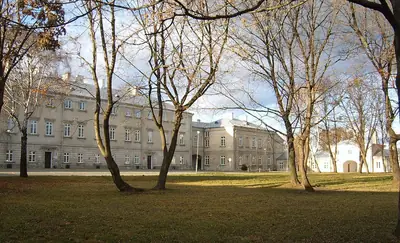
On Akademicka Street, the Zamoyski Palace recalls the family who shaped the city’s history. It was built by Jan Zamoyski, the founder of Zamość, as the private residence of the powerful Zamoyski family.
The palace has been reconstructed several times, and the building visible today is more modest than the grand residence it once was. Even so, it remains an important stop for understanding the relationship between Zamość’s urban plan and its founder.
The former Church and Convent of the Poor Clares
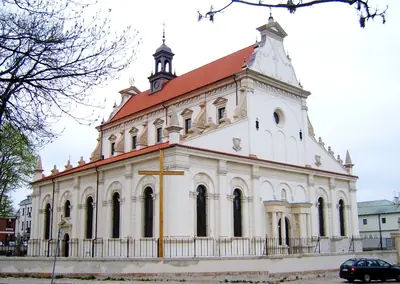
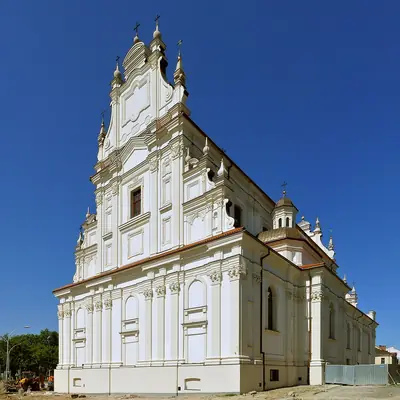
The former Church and Convent of the Poor Clares forms the southern frontage of the Water Market Square. The church was built around 1696 for the Poor Clare sisters, who had arrived in Zamość twenty years earlier. Its Baroque design is restrained, with a single nave, pilasters, gables and a small roof tower.
The convent was added between 1757 and 1775. After decades as one of the most devastated buildings in the historic district, the complex was restored, bringing its Baroque gables and roof tower back into the Old City skyline.
Franciscan Church
The Franciscan Church dominates the eastern corner of the Old City. Its full dedication is to the Annunciation of the Blessed Virgin Mary, although it is generally known simply as the Franciscan Church.
At 56 metres long and 29 metres wide, it is the largest church in Zamość. Completed in the mid-seventeenth century, the building is a major example of Baroque architecture. The site also has a connection with Bernardo Morando: before the church was built, the city’s architect ran a family inn here.
Church of St. Nicholas
The Church of St. Nicholas is a seventeenth-century Renaissance-Baroque church. Its architecture combines the balanced character of the Renaissance with the more expressive details of the Baroque, reflecting the changing styles that shaped Zamość’s religious buildings.
Church of St. Catherine
The Church of St. Catherine is a Baroque church built in the second half of the seventeenth century. It has a design twin in Sandomierz: the Church of St. Michael the Archangel was built according to the same design.
Zamość Synagogue
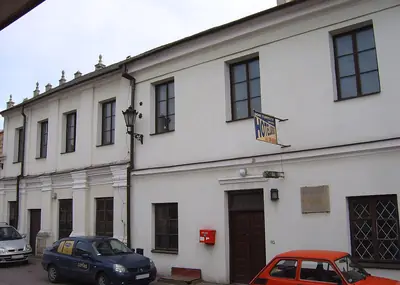
At 11 Zamenhofa Street stands the best-preserved late Renaissance synagogue in Poland. Built between 1610 and 1618, it formed part of Zamość’s original urban plan and reflects the important role of the Jewish community in the city from its beginnings.
The Renaissance façade has retained its harmonious proportions and restrained ornamentation. Inside, the vaulted ceiling and Aron ha-kodesh, or holy ark, recall the building’s role as the spiritual centre of the Jewish community for more than three hundred years. During the Second World War, the Nazis desecrated the synagogue and converted it into a carpenters’ workshop, destroying or looting its furnishings. Its survival makes it an especially significant place in Zamość.
The city gates and fortifications
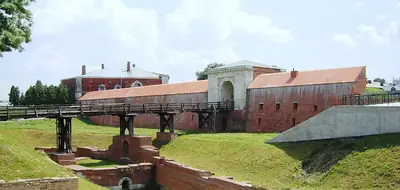
Zamość’s historic entrances reveal the military purpose behind its carefully planned design. Nowa Brama Lwowska, or the New Lviv Gate, and the older Lviv Gate stood along the northern line of the former city walls. Together, they record the city’s development from its foundation at the end of the sixteenth century through the later modernization of its fortifications.
Brama Szczebrzeska, the Szczebrzeszyn Gate, was another original entrance to the fortified town. It formed part of the defensive system that made Zamość one of the region’s most formidable fortresses.
Rotunda Zamość
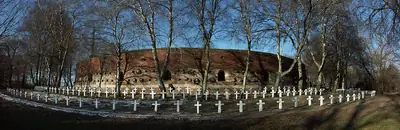
The Rotunda is a circular fortification built between 1825 and 1831 as an artillery battery. Its military role changed during the Second World War, when the German Gestapo used it as a transit camp from 1940 to 1944.
Today, it houses the Museum of Martyrdom of the Zamość Region. The museum documents the atrocities committed at the former camp and commemorates the local population and the thousands of people from Zamojszczyzna who passed through the Rotunda. Some were executed there, while others were deported to concentration camps or forced into slave labour.
Museum of Zamość
The Museum of Zamość was founded in 1926 and occupies the upper floors of restored Renaissance townhouses in the Old City. The buildings were constructed by Armenian immigrants who settled in Zamość in 1585.
Its six departments cover archaeology, ethnography, general history, the library, the Rotunda and education. The museum also holds Poland’s largest collection of Goth culture.
City Park
On the northwestern edge of the historic Old City, City Park offers a different view of Zamość. Created between 1919 and 1926 on land once occupied by fortifications, it was designed according to modernist landscape principles.
The park covers about eleven hectares and is listed in the national register of monuments. Its paths and greenery occupy a space once defined by defensive walls and earthworks, connecting the city’s military past with its twentieth-century development.
Explore Zamość with Neywo
Neywo turns a visit into a Zamość self-guided walking tour: the app tells the story of each place as you reach it, at your own pace, with no group and no schedule. The free audio guide includes 3 walking tours, 1 bus route and 1 bike route, with 33 narrated places in total. Narration is available in 11 languages.
The walking routes are:
- Hetman’s Capital: Palace, Cathedral and Bastions — 2.03 km, 101 minutes and 9 stops.
- The Great Market Square and the Quarters Around It — 1.53 km, 113 minutes and 10 stops.
- Beyond the Walls: Zamość’s New Town — 3.63 km, 89 minutes and 6 stops.
There is also Bus 2: Through Zamość’s Old Town, covering 6.7 km in 29 minutes with 5 stops, and Zamość by Bike: From the New Town to the Old Town and North, a 7.8 km route lasting 39 minutes with 6 stops. Download Neywo and explore Zamość’s Renaissance streets, churches, gates and fortifications while the city’s stories unfold around you.
Places with an audio guide in Zamość
8 places in Zamość with a Neywo audio guide. Each one starts telling its story as you reach it.
Self-guided tours in Zamość
5 tours in Zamość, free in the Neywo app. Each stop tells its story as you reach it.
- Bike ride
Zamość by Bike: From the New Town to the Old Town and North
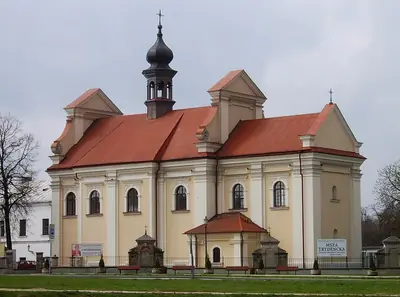
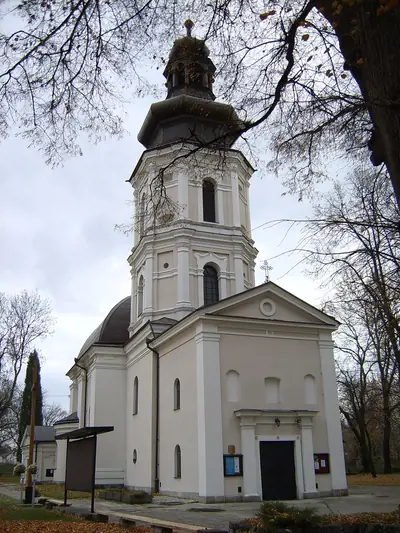
A flat ride on Zamość's cycle paths: start at the New Town market square, pass the twentieth-century church of Our Lady and roll into the Old Town for St Catherine's and the Zamoyski Palace, then ride north to the former Russian military church of St Michael and the modern titanium-roofed church of St Albert.
Nowy Rynek · Our Lady, Queen of Poland church in Zamość · Church of St. Catherine in Zamość · Zamoyski Palace · Saint Michael Archangel church in Zamość · Saint Brother Albert Chmielowski church in Zamość
Open this tour: Zamość by Bike: From the New Town to the Old Town and North - Bus ride
Bus 2: Through Zamość's Old Town
Municipal bus 2 threads through the Old Town. Ride it past the Zamość Synagogue and St Catherine's church to the Zamoyski Palace, then along the UNESCO-listed Old City to the Franciscan church.
Zamość Synagogue · Church of St. Catherine in Zamość · Zamoyski Palace · Old City of Zamość · Franciscan Church, Zamość
Open this tour: Bus 2: Through Zamość's Old Town - Walk
Hetman's Capital: Palace, Cathedral and Bastions
Zamość was drawn on paper by the Italian architect Bernardo Morando for Chancellor Jan Zamoyski, and this walk follows his plan from the founder's palace and bronze monument to the cathedral, the UNESCO-listed Old City, the great arsenal and the gates that guarded the fortress. It ends at the Rotunda, a grim reminder of what the ideal city later endured.
City Park in Zamość · Zamoyski Palace · Jan Zamoyski Monument in Zamość · Cathedral of the Resurrection and St. Thomas the Apostle, Zamość · Sacred Museum of the Zamość Cathedral · Old City of Zamość …
Open this tour: Hetman's Capital: Palace, Cathedral and Bastions - Walk
The Great Market Square and the Quarters Around It
Start under the 52-metre town hall tower on the perfect 100-by-100-metre Rynek, step into the Armenian merchants' houses, then wander through baroque churches, the restored Poor Clares convent and the Jewish quarter of Zamenhofa Street, where a late Renaissance synagogue survived the war.
Town hall in Zamość · Zamość Fortress · House under the Angel · Dawny kościół i klasztor Klarysek · Church of St. Nicholas in Zamość · Franciscan Church, Zamość …
Open this tour: The Great Market Square and the Quarters Around It - Walk
Beyond the Walls: Zamość's New Town
Leave the Old Town at the Franciscan church, the largest in the city, and walk out to the eastern New Town, the quarter that grew up outside the walls. Visit its market square and former synagogue, then the twentieth-century churches that show another side of the city.
Franciscan Church, Zamość · Our Lady, Queen of Poland church in Zamość · Holy Cross church in Zamość · Nowy Rynek · New Town Synagogue in Zamość · Divine Mercy church in Zamość
Open this tour: Beyond the Walls: Zamość's New Town
Walk Zamość with Neywo
Neywo turns Zamość into a self-guided audio tour. Stories arrive as you reach the place they belong to, and the route reshapes when you wander off it.

