Things to Do in Wrocław, Poland: Walking Guide
Things to do in Wrocław: a self-guided journey through Poland’s historic city
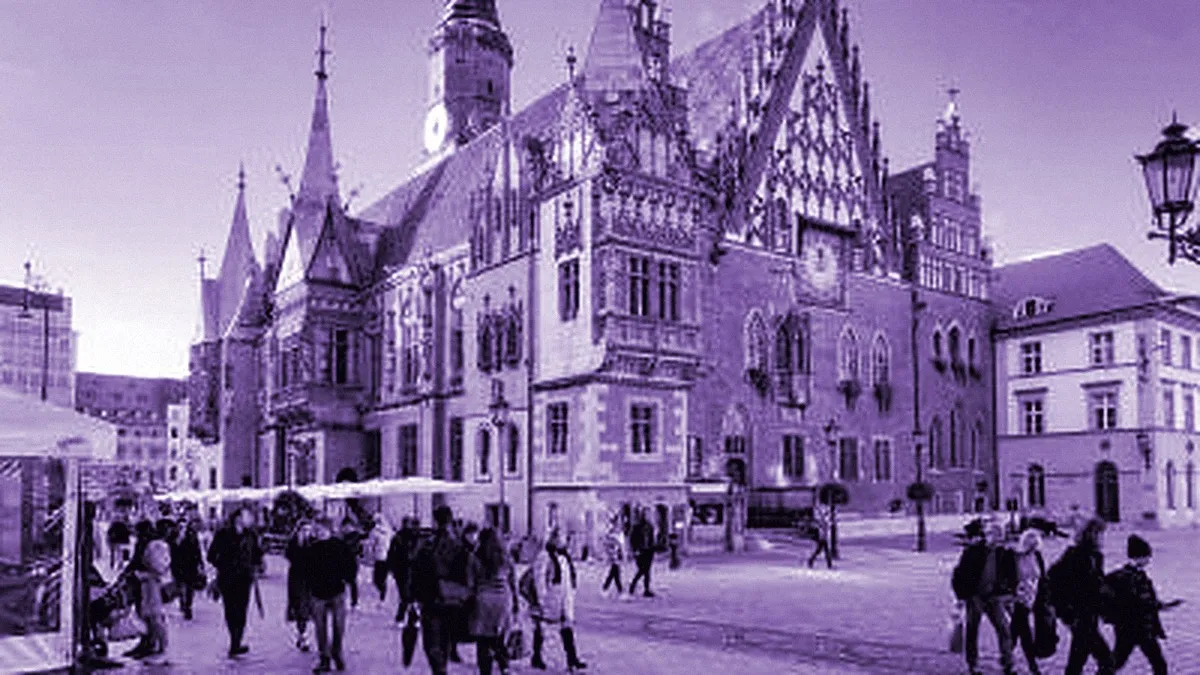
Wrocław is a historic Polish city shaped by Gothic churches, islands on the Oder, modernist architecture and centuries of changing cultural influences. The city’s compact centre is particularly rewarding to explore on foot, with important landmarks ranging from Wrocław Cathedral to Centennial Hall. Neywo’s free audio guide for Wrocław includes 331 narrated places, so you can discover the city while its stories play as you arrive.
What to see in Wrocław
Wrocław’s historic churches
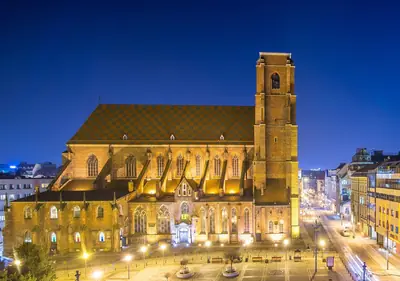
Wrocław’s religious buildings reveal the city’s layered history particularly well. St. Mary Magdalene Church, between Szewska and Łaciarska streets near the central market square, is a Gothic brick church dating from the 13th century. In 1523, it became the first Protestant church in Wrocław. Since 1945, it has served as the cathedral of the Wrocław diocese of the Polish Catholic Church.
The University Church of the Blessed Name of Jesus stands on University Square. Built by the Jesuits between 1689 and 1698, this Baroque church remains the university church of the University of Wrocław. Nearby, the Church of St. Dorothea is a late Gothic hall church whose nave and aisles rise to roughly the same height, creating a broad and unified interior.
The Church of St. Vincent and St. James is another major Gothic landmark in the Old Town. Its origins go back to the 13th century, when Duke Henry II the Pious and Franciscan monks from Prague founded the church and monastery. The cathedral’s crypt became the duke’s burial place after his death in 1241. In 1261, a new foundation charter for Wrocław under Magdeburg Law was announced here. Today, the church is the seat of the Ukrainian Catholic Eparchy of Wrocław.
The Saints Hedwig and Clare church, together with the former convent of the Poor Clares, now belongs to the Ursuline Sisters of the Roman Union. Its former main nave houses the Mausoleum of the Silesian Piasts, the final resting place of rulers from the Piast dynasty of Silesia.
The District of Four Denominations
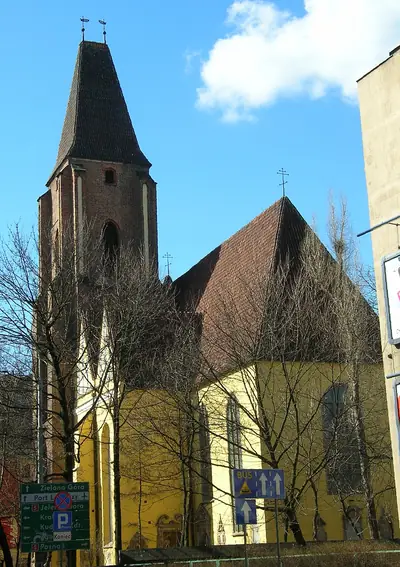
The District of Four Denominations brings several religious traditions together in the centre of Wrocław. The Orthodox Cathedral of the Nativity of the Virgin Mary stands on św. Mikołaja Street and is the main cathedral of the Wrocław-Szczecin diocese of the Polish Orthodox Church.
The building began as a cemetery chapel erected in 1286 and was expanded in the 15th century in the late Gothic style. It was Protestant from 1525 to 1945 and also served as a garrison church between 1741 and 1920. The church’s present Orthodox role is therefore one chapter in a much longer history.
Saint Anthony of Padua Church, at 30 Saint Anthony Street, adds another layer to the district’s monastic past. A Franciscan monastery occupied the site from 1679 to 1793, after which the Sisters of the Elizabethan Order established a hospital there.
Cathedral Island and the Oder
Cathedral Island is Wrocław’s oldest district and one of the essential places to visit in the city. The Church of Our Lady on the Sand stands on a small island in the Oder, north of the Old Town. Founded in the 12th century, it originally served as a monastery church for the Canons Regular of St. Augustine. Its name comes from the Latin Sancta Maria in Arena: over time, arena was translated as “sand”, giving the island its name.
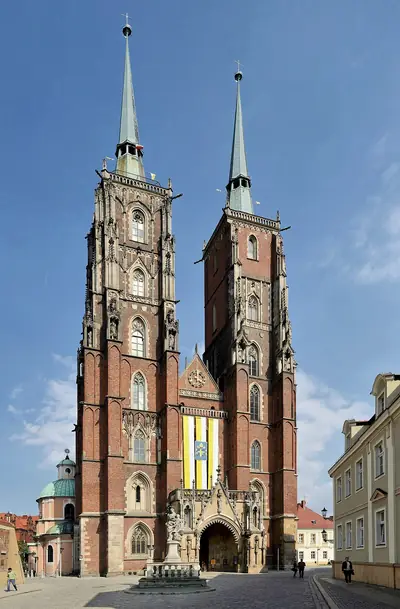
Wrocław Cathedral, formally the Archcathedral of St. John the Baptist, is the centrepiece of the district. The Gothic building was constructed mainly between 1244 and 1341, although it is the fourth church to occupy the site. Baroque additions and post-war restoration have added further layers to the building. Its two towers rise to nearly 98 metres, making them the highest church towers in Wrocław.
National Museum in Wrocław
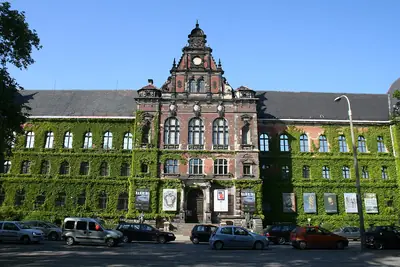
The National Museum in Wrocław was established on March 28, 1947, and officially inaugurated on July 11, 1948. Its collection is closely connected with the post-war transfer of art from cities such as Lviv after the border changes that reshaped Central Europe.
The museum holds approximately 120,000 objects, including paintings, drawings, prints, sculptures, decorative arts and photographs. Its collections range from the medieval period to the present day, with a particular focus on painting, sculpture and the art of Silesia. The institution comprises its main building and three branches, with exhibition spaces arranged across four departments.
Centennial Hall and the Four Domes Pavilion
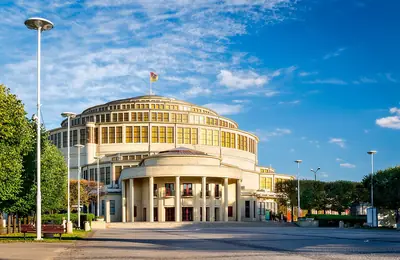
Centennial Hall, or Hala Stulecia, is one of Wrocław’s great architectural landmarks and a UNESCO World Heritage Site. Designed by Max Berg and built between 1911 and 1913, it was conceived as a multifunctional venue for exhibitions, concerts, opera and sporting events.
Its pioneering reinforced-concrete construction made it an important reference point for 20th-century architecture. The cupola has an inner diameter of 69 metres and reaches 42 metres in height. The central space can seat around 7,000 people, or nearly 20,000 with standing room.
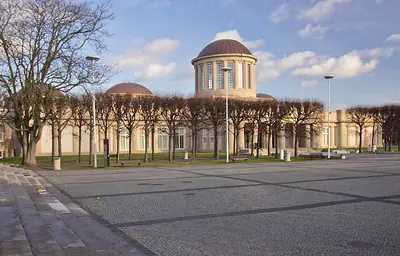
The nearby Four Domes Pavilion was also built between 1911 and 1913, for the Breslau Centennial Exhibition. Designed by Hans Poelzig, it now houses a museum of contemporary art as a branch of the National Museum in Wrocław. Its inner courtyard contains a Pallas Athena fountain created by Robert Bednorz and Hans Poelzig. After post-war alterations were removed, the pavilion reopened as a Museum of Contemporary Art on June 25, 2016.
Szczytnicki Park and Saint John of Nepomuk Church
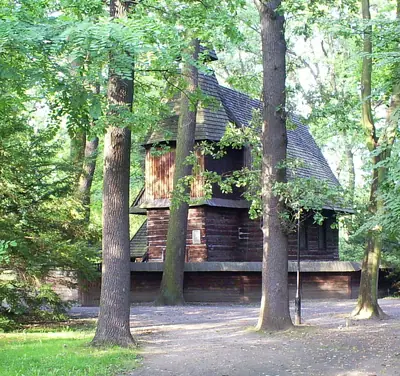
Szczytnicki Park is home to the small wooden Church of Saint John of Nepomuk. The church was originally built at the end of the 15th or beginning of the 16th century, then moved twice: first to Kandrzin-Pogorzelletz around the end of the 18th century, and finally to Szczytnicki Park in 1913.
Its traditional timber construction, known as Schrotholzkirche, makes it a notable example of wooden sacred architecture. The church has stood for more than five centuries, despite its changing locations.
Bastion Ceglarski
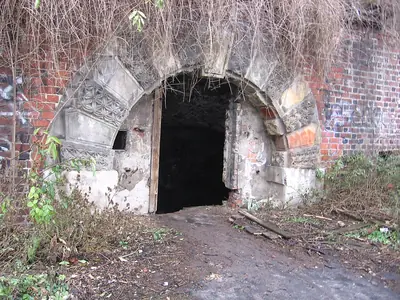
Bastion Ceglarski is a surviving fragment of Wrocław’s former defensive system. Built in 1585, it formed part of the northeastern section of the outer walls surrounding the New Town. The bastion and surrounding fortifications were demolished in the early 19th century, leaving the structure as a reminder of the city’s fortified past.
A Wrocław self-guided walking tour with Neywo
Neywo offers a free Wrocław audio guide with 7 walking tours, 1 bus route and 1 bike route. Together, they cover 331 narrated places, and the narration is available in 11 languages.
The walking tours range from 1.01 to 3.02 km and from 84 to 118 minutes. They include routes through the Market Square, Cathedral Island, the District of Four Denominations, the area around Centennial Hall and Szczytnicki Park, Świdnicka Street, and the route from Świebodzki Station to the Neon.
The bus route covers 8.4 km in 36 minutes, while the bike route covers 4.8 km in 24 minutes. Each route includes narrated stops, from 9 to 12 depending on the tour. The app tells the story of each place as you reach it, at your own pace, with no group and no schedule.
Wrocław is one destination in Poland that rewards taking time to explore its different districts. Download Neywo and discover its churches, museums, islands, parks and modernist landmarks as you walk, cycle or travel across the city.
Places with an audio guide in Wrocław
8 places in Wrocław with a Neywo audio guide. Each one starts telling its story as you reach it.
Self-guided tours in Wrocław
9 tours in Wrocław, free in the Neywo app. Each stop tells its story as you reach it.
- Bike ride
Dwarfs, Rails and Neon: A Ride Through Wrocław's Southern Rim
A flat ride on cycle lanes from the museum inside an air-raid shelter to the old Świebodzki station, past the Anonymous Passerby sculpture and the little bronze dwarfs, under the Good Evening neon sign at the main station, then on to the Schaffgotsch Palace and the Copernicus Monument.
Wrocław Contemporary Museum · Wrocław Świebodzki · Legions Square · Polish Theatre in Wrocław · Monument to the Anonymous Passerby · Krista …
Open this tour: Dwarfs, Rails and Neon: A Ride Through Wrocław's Southern Rim - Bus ride
Bus 243 Across Wrocław: Ruins, Churches and Solidarity Square
Ride MPK bus 243 from Księże Wielkie through the city centre and out west along Legnicka. You pass a ruined Lutheran chapel, the Copernicus monument, the Anonymous Passerby sunk into Świdnicka Street, Gothic Corpus Christi Church and the Orthodox cathedral in the District of Four Denominations. It ends at Solidarity Square, where the city's modern history is written in stone.
Ruined chapel of former Bethanien care facility in Wrocław · Saint Maurice church in Wrocław · Nicolaus Copernicus monument in Wrocław · Monument to the Anonymous Passerby · Corpus Christi Church, Wrocław · 45 Kazimierza Wielkiego Street in Wrocław …
Open this tour: Bus 243 Across Wrocław: Ruins, Churches and Solidarity Square - Walk
Rynek Stories: Pillory, Town Hall and the Poet from Lwów
Wrocław's market square is one of the largest in Europe. Circle it from the Gothic church where Breslau turned Protestant, past the Phoenix department store, a reconstructed pillory, a town hall with a hidden bear and a poet's statue that fled Lwów. Continue to the flame-shaped needle on Salt Square, the painted House of the Seven Electors, the museum of Pan Tadeusz and the largest house on the square, and end under the tower of St Elizabeth's.
St. Mary Magdalene Church, Wrocław · Barasch Brothers' Department Store · Pillory in Wrocław · Wrocław Town Hall · Aleksander Fredro Monument in Wrocław · Old Stock Exchange, Wrocław …
Open this tour: Rynek Stories: Pillory, Town Hall and the Poet from Lwów - Walk
Cathedral Island: Wrocław's Oldest Ground
Start at the Orthodox church on Sand Island and cross the Bridge of Lovers to Ostrów Tumski, where the city began. Visit the largest monument to John of Nepomuk anywhere, the archbishop's palace, the oldest surviving monument in the city in front of the cathedral, the oldest building in Wrocław and a sand-island church full of medieval art. End in the university's botanical garden, the second oldest in Poland.
Saints Cyril and Methodius church in Wrocław · Church of Our Lady on the Sand in Wrocław · Tumski Bridge · St. Martin's Church in Wrocław · Monument of John of Nepomuk and church of the Holy Cross in Wrocław · Archbishop's Palace, Wrocław …
Open this tour: Cathedral Island: Wrocław's Oldest Ground - Walk
Baroque Halls and a Painted Battle: University to Racławice
Start in the university's baroque ceremonial hall and the Fencer Fountain outside, pass the Jesuit-built churches, the Romanesque House on Nankier Square and the old market hall beside the medieval Bear Tower, then end at the giant panorama of a battle and the National Museum on the edge of the old moat.
Aula Leopoldina · Fencer sculpture, Wrocław · University Church of the Blessed Name of Jesus in Wrocław · Saints Hedwig and Clare church in Wrocław · Church of St. Vincent · Romanesque House in Wrocław …
Open this tour: Baroque Halls and a Painted Battle: University to Racławice - Walk
The District of Four Denominations
A small corner of the old town where a synagogue, an Orthodox cathedral, a Catholic and a Protestant-rooted church stand within a few streets. Start at the Royal Palace, add the stock-exchange palaces that tell how rich this quarter once was and the memorial to the ghetto victims, and finish at the archaeological museum.
Wrocław Palace · Wallenberg-Pachaly Palace in Wrocław · Courtly church in Wrocław · Monument of Warsaw Ghetto Victims in Wrocław · New Stock Building, Wrocław · White Stork Synagogue …
Open this tour: The District of Four Denominations - Walk
Centennial Hall and Szczytnicki Park: Domes, Fountains and a Wooden Church
Spend a day in the UNESCO-listed exhibition grounds of 1913: the Zoo and its Africarium, the Diana Monument, the Four Domes Pavilion and the Centennial Hall itself. Watch the Multimedia Fountain, stroll through one of Europe's oldest Japanese gardens and end in Szczytnicki Park beside a wooden church that travelled here from the countryside.
Wrocław Zoological Garden · Africarium · Diana Monument in Wrocław · Four Domes Pavilion, Wrocław · Centennial Hall · Wrocław Multimedia Fountain …
Open this tour: Centennial Hall and Szczytnicki Park: Domes, Fountains and a Wooden Church - Walk
Świdnicka Street: Opera, Dwarfs and Gothic Churches
Follow the busy Świdnicka Street from the little bronze Papa Krasnal to the Church of St Dorothea, the Monopol Hotel and the Opera. Pass the Gothic Corpus Christi Church, the puppet theatre and the WRO art centre, and finish at the Copernicus Monument and the hidden Saddlebag Bastion.
Papa Krasnal · Church of St. Dorothea · Monopol Hotel · Wrocław Opera · Saint Jerome House in Wrocław · Corpus Christi Church, Wrocław …
Open this tour: Świdnicka Street: Opera, Dwarfs and Gothic Churches - Walk
From Świebodzki Station to the Neon: Trains, Theatres and Dwarfs
Start with the museum of old games and computers and the largest model railway in Poland, then pass the old Świebodzki station and Legions Square. Walk by the Polish Theatre and the Anonymous Passerby sculpture, look for a little bronze dwarf, and end under the Good Evening neon sign beside the main station.
Museum of Games and Computers of the Past Era · Kolejkowo · Wrocław Świebodzki · Legions Square · Polish Theatre in Wrocław · Monument to the Anonymous Passerby …
Open this tour: From Świebodzki Station to the Neon: Trains, Theatres and Dwarfs
Walk Wrocław with Neywo
Neywo turns Wrocław into a self-guided audio tour. Stories arrive as you reach the place they belong to, and the route reshapes when you wander off it.

