Visiting Sitges, Spain: Top Sights on Foot
Things to Do in Sitges: Museums, Heritage and the Sea
Sitges is a coastal town in Catalonia known for its historic centre, museums, protected heritage sites and Mediterranean setting. The best things to do in Sitges include exploring the Maricel ensemble, visiting artists’ former homes, discovering contemporary art and finding landmarks across the municipality. Neywo has a free audio guide for Sitges with 20 narrated places.
What to See in Sitges
Maricel Museum and Palau Maricel
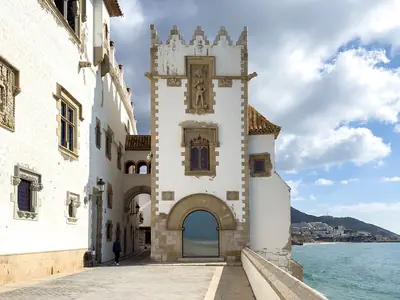
The Maricel ensemble brings together two closely related cultural landmarks in Sitges’s historic centre: Palau Maricel and the Maricel Museum. Palau Maricel, also known as Maricel de Terra, was built between 1913 and 1916 as part of the Noucentista artistic ensemble of Maricel. Its rooms are now used for concerts, conferences, presentations, recitals, civil weddings, congresses and meetings.
Beside the palace, on Carrer Fonollar and directly by the sea, the Maricel Museum is also known as Museu Maricel de Mar. It reopened on 22 December 2014 after four years of renovation and is part of the Local Museums Network of the Barcelona Provincial Council.
Cau Ferrat Museum
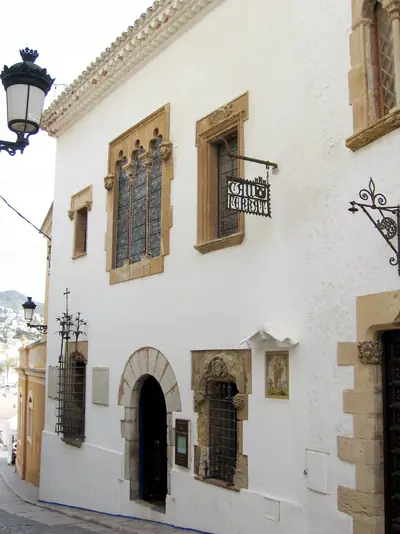
The Cau Ferrat Museum occupies the former home and studio of Santiago Rusiñol, an artist and writer associated with Catalan Modernisme. Located in the old town beside Sant Sebastià beach, it is a biographical museum in the house and workshop where Rusiñol lived and worked.
The building is a Cultural Property of National Interest. It became a public museum in 1933 and reopened in December 2014 after renovation work. Since 2009, it has also been a museum section of the National Art Museum of Catalonia.
Can Llopis Romanticism Museum
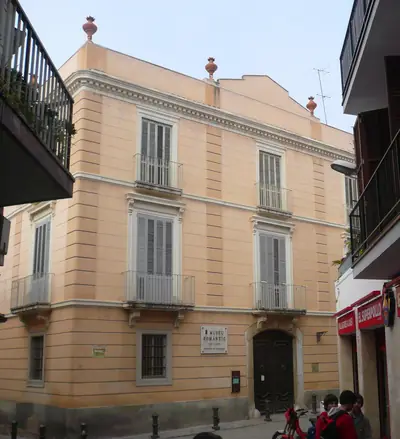
Can Llopis Romanticism Museum, or Museu Romàntic, is housed in the former Llopis family residence in Sitges’s old centre. Built in 1793 outside the town’s medieval walls, it was once regarded as one of the noblest homes in the newer districts of Sitges.
The building’s restrained neoclassical design is notable for its sober exterior decoration. It is officially recognised as a cultural property of national interest.
Fundació Stämpfli
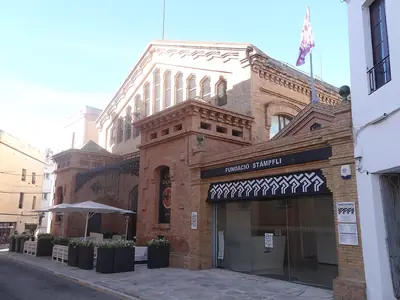
The Fundació Stämpfli, also called the Museum of Contemporary Art of Sitges, presents contemporary art in two historic buildings: the former Mercat del Peix, or fish market, and the adjoining Can Mec.
The foundation was established in 2011 as a private initiative. It forms part of the Sitges Heritage Consortium, which provides visitor services and cultural mediation. Its permanent collection was first presented to the public in 2010 in an exhibition at the Miramar building.
Monument against Homophobia in Sitges
The Monument against Homophobia in Sitges commemorates the persecution suffered by lesbians and gay men. Known in Catalan as the Escultura al collectiu homosexual, it was placed here on 5 October 2006.
Its inverted-triangle design gives the memorial a striking form. It was the first commemorative monument of its kind in Spain and remains an important place to see in Sitges.
Santa Bàrbara
Santa Bàrbara is a small neoclassical church in Sitges, in the Garraf area. Its architectural character makes it a distinctive heritage stop, and it is included in the Inventory of the Architectural Heritage of Catalonia.
Castles and towers around Sitges
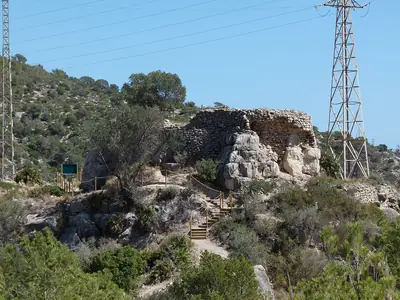
Several protected sites extend beyond the central museums and coastline. Castell de Garraf is an old fortification near the village of Garraf and a cultural property of national interest. The nearby Església de Santa Maria Estrella del Mar, also known simply as Santa Maria, is part of Garraf’s architectural heritage and is included in the Inventory of the Architectural Heritage of Catalonia.
Castell de Miralpeix, Torre de Campdàsens and Castell de Campdàsens are also part of Sitges’s cultural heritage. Castell de Campdàsens, or Castellot de Campdàsens, is officially recognised as a Cultural Property of National Interest.
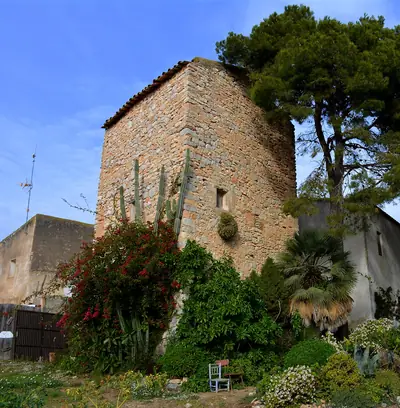
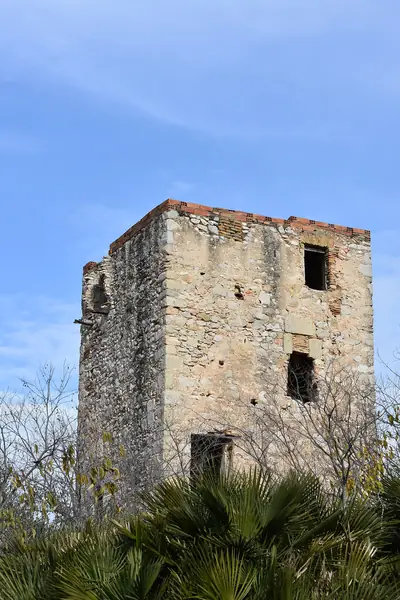
Torre de Can Planes, in the Parc del Garraf, combines a farmhouse with a square defensive tower. The site preserves traces of machicolations and narrow defensive openings, some of which were later enlarged into windows. The lower part of the tower is damaged, while the farmhouse entrance retains its wedge-shaped stone framing. The site was once known as Font de la Gallina and is mentioned as early as the thirteenth century. The present building dates from the fifteenth or sixteenth century, and the tower is linked with the defensive system of Campdàsens.
Religious heritage
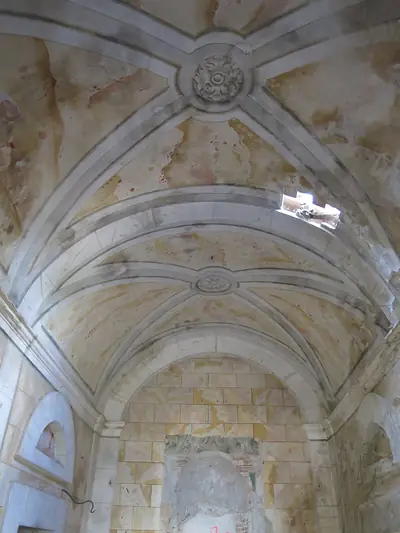
The Trinitat Hermitage, or Ermita de la Trinitat, is a small religious building and an example of popular architecture in Sitges. Other historic religious landmarks include la Preciosíssima Sang, also written as la Preciosísima Sang, and Mare de Déu de Gràcia.
The village of Garraf adds another religious heritage stop with the Església de Santa Maria Estrella del Mar. Its setting connects the building with the area’s earlier identity as the Quadra de Garraf and with its present place within the municipality of Sitges.
Explore Sitges with a Self-Guided Audio Tour
A Sitges self-guided walking tour is a relaxed way to connect the town’s museums, monuments and seafront. Neywo’s walking route, Rusiñol’s Sitges: Artists, Museums and the Sea, covers 4.68 km in around 120 minutes and includes 10 narrated stops.
The walk includes Sant Sebastià de Sitges, the Cau Ferrat Museum, Palau Maricel, Fundació Stämpfli, Sant Bartomeu i Santa Tecla de Sitges, the Monument a El Greco, Can Llopis Romanticism Museum, the Monument against Homophobia in Sitges, Mare de Déu del Vinyet and Santa Bàrbara.
For a shorter outing, Sitges Seafront by Bike covers 2.6 km in around 13 minutes, with two narrated stops: the Monument against Homophobia in Sitges and Mare de Déu del Vinyet. Together, the app offers one walking tour and one bike route in Sitges.
If you are exploring more of the region, you can continue through Catalonia or discover other destinations in Spain, including Tarragona and Reus.
Download Neywo and Explore Sitges at Your Own Pace
Download Neywo for a free Sitges audio guide covering 20 narrated places. Choose between one 4.68-km walking tour lasting 120 minutes and one 2.6-km bike route lasting 13 minutes, with 10 narrated stops on the walk and two on the bike route.
The app tells the story of each place as you reach it, at your own pace, with no group and no schedule. Narration is available in 11 languages, so you can explore Sitges independently while moving between its museums, heritage landmarks and seafront.
Places with an audio guide in Sitges
8 places in Sitges with a Neywo audio guide. Each one starts telling its story as you reach it.
Self-guided tours in Sitges
2 tours in Sitges, free in the Neywo app. Each stop tells its story as you reach it.
- Bike ride
Sitges Seafront by Bike
A short, flat ride along the Sitges cycle path beside the beaches, from the pioneering monument against homophobia to the sanctuary of the Vinyet at the western end of the promenade.
Monument against homophobia in Sitges · Mare de Déu del Vinyet
Open this tour: Sitges Seafront by Bike - Walk
Rusiñol's Sitges: Artists, Museums and the Sea
Follow the whitewashed old town where Catalan Modernisme found its home. Visit the house-studio of painter Santiago Rusiñol, the sea-front Maricel palace and a contemporary art museum in a former fish market, climb to the asymmetrical parish church above the beach, then stroll the seaside promenade past El Greco to the sanctuary of the Vinyet and the neoclassical chapel of Santa Bàrbara.
Sant Sebastià de Sitges · Cau Ferrat Museum · Palau Maricel · Fundació Stämpfli · Sant Bartomeu i Santa Tecla de Sitges · Monument a El Greco (Sitges) …
Open this tour: Rusiñol's Sitges: Artists, Museums and the Sea
Walk Sitges with Neywo
Neywo turns Sitges into a self-guided audio tour. Stories arrive as you reach the place they belong to, and the route reshapes when you wander off it.

